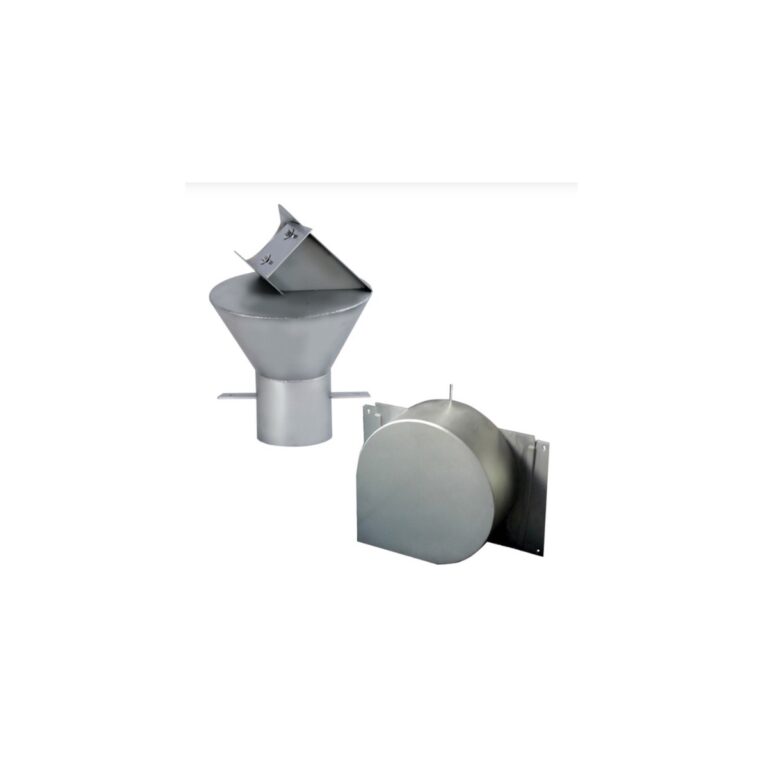
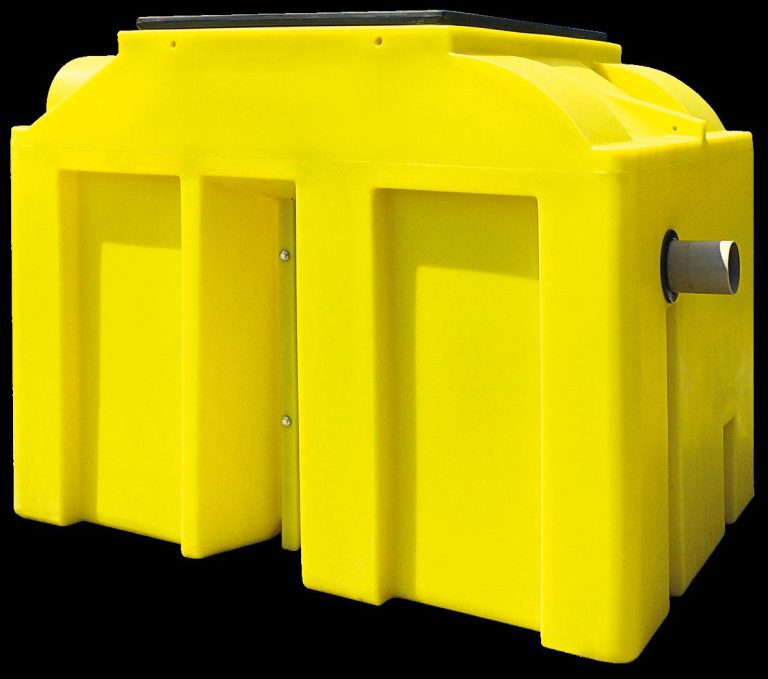
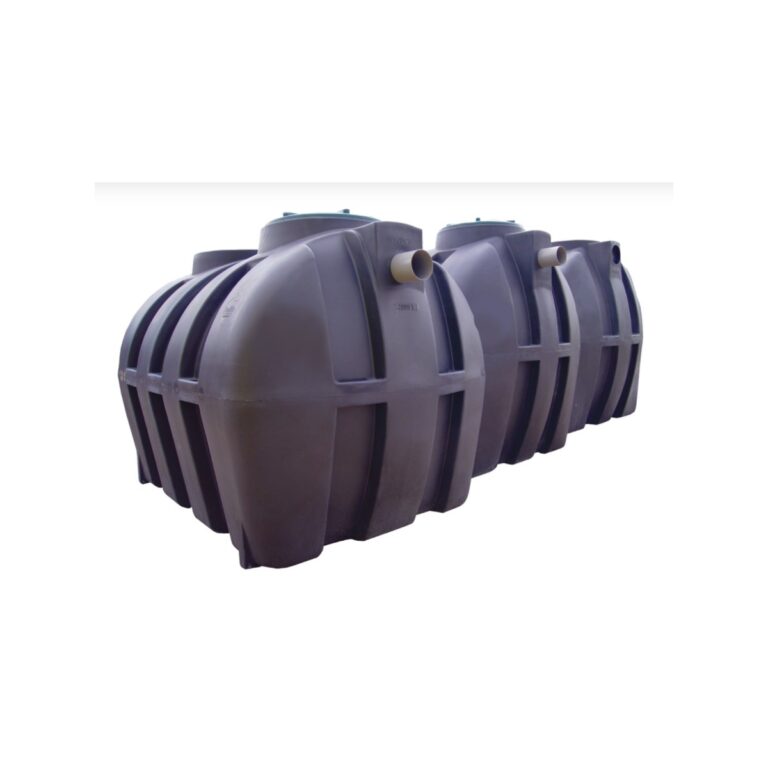
The first stage of treating domestic sewage and an integral part of biological wastewater treatment
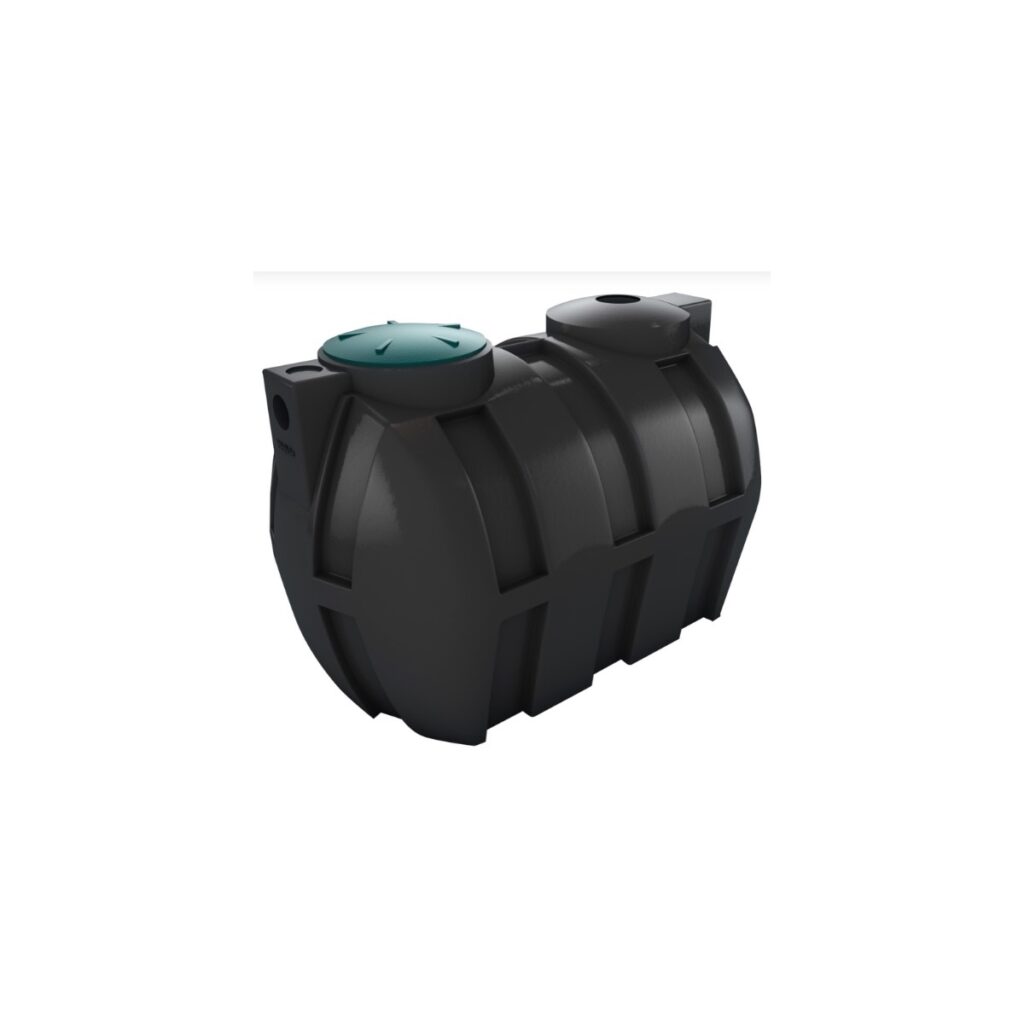
The septic tank operates through two treatment stages. The first is preliminary anaerobic treatment within the tank, separating light substances (oil, fat) from heavier materials that settle as sediment. The second stage provides biological treatment through aerobic processes with filtration. Selection of the septic tank and drainage system depends on the number of inhabitants, water-ground conditions and the topography of the area.
Highly effective domestic sewage treatment
High-density polyethylene construction
Durable and resistant to fluctuations in soil stress
Impact-resistant, frost-resistant, pH-resistant
Lightweight for easy assembly and installation, no crane required
Choice of capacity from 2,000 litres to 5,000 litres
Tank equipped with basket using replaceable filtration cartridges
Additional equipment – extension shaft and cover with easy-to-use screw cap
Sewage flows through filters into a distribution well connected to drainage systems laid on washed gravel (16–32mm fraction). A geotextile covering prevents sand infiltration while enabling rainwater filtration and biological-coating development for sewage after-treatment. Contaminant reduction achieves 60% after the first stage and 90% after the second.
Product code: APST.
Standards: BS EN 12566-1+A1:2006.
Specifying at design stage? Learn how to specify drainage and interceptor maintenance correctly with an accredited CPD session, delivered by Andel engineers.